
There were already twenty.
Twenty occasions where something published here — dismissed, ignored, described as speculative or simply allowed to disappear beneath the news cycle — was later dragged closer to the official record by documents, hearings, admissions or subsequent events.
I wanted number twenty-one to matter.
It turns out I had already missed it.
On 26 April 2026, Thom Aster published 12 Major Newsrooms Published Proof of Russian Microwave Attacks on Americans. Then They Deleted It.
That investigation made several claims. Some remain disputed. Some remain unproven. The allegation that Russia was responsible for the incidents has not been formally established by the United States government. Nor has the proposition that every anomalous health incident was caused by a directed-energy weapon.
But one part of that investigation can now be tested against what happened next.
The article challenged the integrity of the intelligence assessment underpinning the government’s public position. It reported that dissenting evidence existed inside government; that alternative analysis had been suppressed or discounted; and that the public conclusion sat uneasily beside what other parts of the US government were investigating.
Forty-six days later, the Director of National Intelligence withdrew the assessments.
Not amended them.
Not quietly superseded them.
Rescinded them.
And the government’s stated reasons are astonishingly close to the failures the April investigation had placed at the centre of the story.
This is Vindication #21.
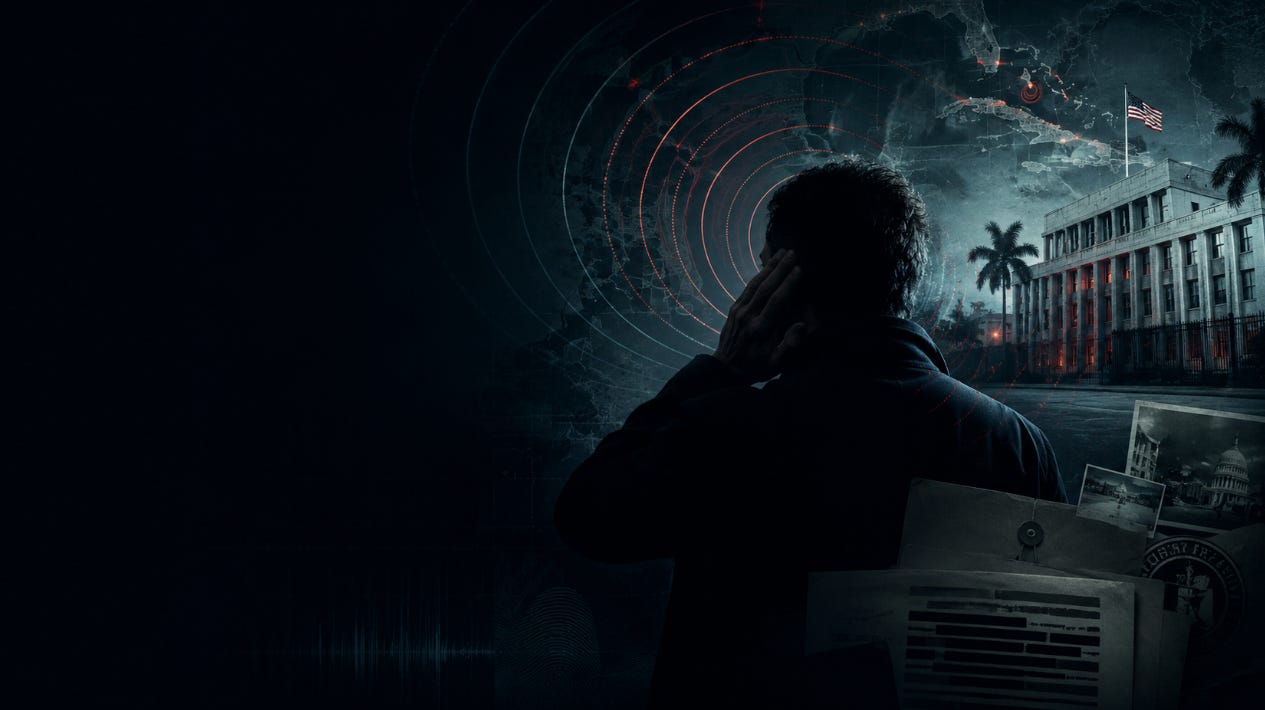
The assessment that defined the official story
For years, the public argument over “Havana Syndrome” — formally Anomalous Health Incidents, or AHIs — contained an extraordinary contradiction.
People serving the United States reported sudden neurological symptoms in Cuba, China, Europe, the United States and elsewhere. Congress established statutory mechanisms for treatment and compensation. The Pentagon maintained a dedicated cross-functional team. Government laboratories studied directed-energy bioeffects.
Yet the intelligence community’s declassified assessments pushed hard in the opposite direction.
The 2023 Intelligence Community assessment concluded that a foreign adversary was very unlikely to be responsible for the reported incidents.
That became the line around which much of the public discussion settled.
The April Thom Aster investigation challenged it.
It pointed to the 2024 congressional Silent Weapons hearing, where witnesses including former officials, investigators and attorneys representing affected personnel described evidence they believed had been mishandled or suppressed.
It pointed to the National Academies’ earlier scientific assessment, which found directed pulsed radio-frequency energy to be a plausible mechanism for the distinctive acute symptoms in a subset of cases.
And it drew attention to something more fundamental:
What if the confidence of the public intelligence assessment was itself the problem?
On 26 April, that remained an argument.
On 11 June, it became an official government finding.
11 June 2026: the DNI pulls the assessments
The document is only two pages long.
Its significance is difficult to overstate.
In an unclassified congressional notification dated 11 June 2026, the Office of the Director of National Intelligence said the National Intelligence Council had been directed to rescind both the 2023 and 2025 Intelligence Community Assessments on AHIs because they failed to meet established Intelligence Community analytic standards.
The memorandum then listed what had gone wrong.
According to the DNI’s notification, the rescinded assessments had:
selectively excluded intelligence and evidence that did not support their conclusions;
mischaracterised sources in ways that suppressed alternative analysis;
omitted information needed to judge source quality and reliability;
relied on a medical study the DNI described as ethically flawed without adequately reflecting methodological criticism; and
restricted intelligence collection in a way that preserved an analytic position dependent upon the absence of evidence.
Read that last point again.
The problem identified by the DNI was not simply that analysts reached the wrong conclusion.
The memorandum says intelligence collection itself had been limited in order to maintain an analytic line that relied upon a lack of evidence.
That is qualitatively different.
It means the government has now formally acknowledged that the process used to construct its previous public assessment was defective.
THEN / NOW
The comparison is the entire reason this qualifies as a vindication.
THEN — 26 April 2026
The Thom Aster investigation argued that the public intelligence position could not safely be treated as the final word because contrary technical evidence and internal dissent existed elsewhere inside the government.
It described the intelligence assessment as deeply contested and alleged that alternative findings had been suppressed.
NOW — 11 June 2026
The Director of National Intelligence formally rescinded the 2023 and 2025 assessments, saying they had failed analytic standards and identifying excluded contrary evidence, suppression of alternative analysis and restricted intelligence collection among the reasons.
That is the crossing point.
The April article did not merely disagree with an intelligence judgment.
The intelligence community subsequently withdrew the judgment because its own review found the analytical process defective.
That is Vindication #21.
And Congress went further
There is an important distinction here.
The DNI memorandum is the evidentiary core of this article. It is an official intelligence document.
Statements by politicians about why those failures occurred are something else and must be treated as such.
On the same day as the rescission, Republican House Intelligence Committee chairman Rick Crawford issued a far stronger political characterisation, calling the assessments “flawed, fraudulent, and manufactured” and alleging that they had been deliberately constructed in a way that harmed affected personnel. Those are Crawford’s allegations, not findings independently established by the rescission memorandum. His full statement is here.
The distinction matters.
We do not need the maximal allegation.
The DNI’s own document is damaging enough.
The fight inside the Pentagon had already begun
There is another reason the chronology matters.
No responsible reading of the evidence supports claiming that the Pentagon restructured its AHI programme because Thom Aster got too close.
The timing rules that out.
On 2 February 2026, nearly three months before the April article, Senators Jeanne Shaheen and Susan Collins sent a bipartisan letter to Defense Secretary Pete Hegseth asking him to halt a proposed move of the Pentagon’s AHI Cross-Functional Team.
The senators said the team had not been made available for congressionally required briefings since 2024.
Their wording was unusually severe: they said the failure was a violation of law and raised concerns about the motivations of some people inside the department concerning continuation of the team’s work.
They wanted the existing structure preserved while work continued on attribution and technology.
Four days later, on 6 February, the Pentagon moved the team anyway.
A 20 February Pentagon announcement confirmed that the AHI Cross-Functional Team had been transferred into the Office of the Under Secretary for Research and Engineering, describing the move as a response to the mission’s increasing technical complexity. The team was placed under a chain involving the Pentagon’s Critical Technologies leadership.
The Pentagon said existing scientific, clinical and stakeholder activities would continue uninterrupted.
So there are two facts that must coexist.
The Pentagon said the move would strengthen the technical mission.
Two senators were sufficiently concerned about oversight and continuity that they asked Hegseth to stop it.
Neither fact cancels the other.
Then a senator used the words “breakthrough research related to attribution”
Three months later, the public record became considerably stranger.
On 19 May 2026, Senator Shaheen questioned Under Secretary for Research and Engineering Emil Michael during a Senate Armed Services hearing.
She explicitly raised concern that moving AHI into a more technical organisation could weaken its wider intelligence and interagency responsibilities.
Then she said this:
There was “breakthrough research related to attribution.”
Those are not words supplied by this publication. They appear in the official Senate transcript.
Michael’s response was equally revealing.
He told the committee that treatment and diagnosis were the programme’s first priority, attribution was the second, and policy the third. He said intelligence-community collaboration had increased following the transfer.
Then he explained why the budget was increasing.
The Pentagon wanted more “real-world testing” to confirm science that, he said, had already been preliminarily confirmed over the previous several years. That work could then support countermeasures, better treatment, stronger data and better diagnosis.
Shaheen said she was looking forward to a briefing the following day.
Michael replied that he thought she would be pleased by it.
Whatever was presented in that subsequent classified briefing has not, as far as this investigation can establish, been publicly released.
And that leaves a very important question:
What exactly was the breakthrough attribution research?
The mysterious device
There is one obvious candidate.
It is important to label it correctly.
It remains a candidate, not a proven connection.
In January, the House Homeland Security Committee began investigating reports that Homeland Security Investigations had acquired a foreign-made device potentially relevant to AHIs.
In an official letter to Homeland Security Secretary Kristi Noem, the committee carefully attributed the underlying details to news reporting rather than independently certifying them as fact.
According to those reports, as repeated in the congressional letter:
the acquisition cost was allegedly in the eight-figure range;
the device could produce pulsed radio waves;
it allegedly contained Russian components while not being entirely Russian in origin;
it had reportedly been transferred to the Pentagon;
and the Pentagon had reportedly spent more than a year testing it.
The committee demanded a classified briefing covering the procurement, final price, results of the year-long testing period, and whether the device had changed ODNI’s previous assessment that AHIs were not caused by a malicious foreign actor. The committee publicly announced the investigation here.
No public release located for this investigation discloses those test results.
We therefore cannot write:
“This device proved Havana Syndrome.”
We cannot write:
“This was the breakthrough Shaheen referenced.”
But the chronology is impossible to ignore.
In January, Congress demanded the results of reported year-long testing of a pulsed-radio-wave device.
In May, Shaheen publicly referred to breakthrough attribution research.
In the same hearing, the Pentagon said it wanted expanded real-world testing to confirm science it regarded as preliminarily established.
Weeks later, the DNI rescinded the old assessments.
That sequence justifies investigation.
It does not yet justify collapsing those facts into a single causal claim.
11 June: $10 million for attribution
The date of the intelligence rescission produced another coincidence that deserves attention without being overstated.
Also on 11 June, Senator Shaheen announced that the Senate Armed Services Committee-approved FY2027 National Defense Authorization Act contained new AHI oversight provisions.
According to Shaheen’s official announcement, the legislation structured staffing around attribution, care and research, required a Government Accountability Office review of the CFT’s leadership change and authorised $10 million specifically for research into potential attribution.
The legislative text goes further.
The Senate’s FY2027 NDAA proposal called for full-time representation from Policy, Personnel and Readiness, Intelligence and Security, Research and Engineering, the Defense Intelligence Agency, Defense Health Agency and National Security Agency. It also required recurring reports to Congress.
And then comes one of the most interesting pieces of the entire document.
Congress proposed ordering the Government Accountability Office to examine:
what the CFT had actually found about the causes and sources of AHIs;
any individuals, entities, capabilities or phenomena to which incidents might plausibly be attributed;
why the CFT was transferred from Policy into Research and Engineering;
and what support it had received from the DIA, NSA, National Ground Intelligence Center and other elements of the defence intelligence enterprise.
Congress was not asking merely whether patients were receiving treatment.
It was asking:
What did the investigation find?
Who or what might be responsible?
Why was the team moved?
And which intelligence agencies were involved?
Those questions remain unanswered publicly.
Congress was also worried about the money disappearing into the structure
The budget record adds another layer.
In its report accompanying the defence legislation, the Senate Armed Services Committee said the CFT had significantly advanced the Pentagon’s understanding of emerging directed-energy threats.
It urged the department to continue efforts to characterise those threats, understand their origin and develop countermeasures.
Then it raised a transparency concern.
The committee said the Defense Health Program budget request cut AHI research and sought to eliminate the stand-alone project code. It urged the Pentagon to maintain robust funding. The language is in the official Senate committee report.
That does not prove anyone was attempting to hide the programme.
Budget programmes are routinely consolidated and reorganised.
But eliminating a dedicated project identifier objectively makes a programme less obvious to someone attempting to follow it by name across public budget books.
And Congress noticed.
That is why this article will not present the budget restructuring as evidence of a cover-up.
It is instead another documented oversight concern in a story already characterised by missing briefings, reassigned responsibilities, classified testing and a subsequently invalidated intelligence assessment.
The physical directed-energy research programme is not hypothetical
The phrase directed-energy bioeffects can sound exotic until one looks at what the US military publicly funds.
The US Navy operates a Directed Energy Health Effects Directorate at Naval Medical Research Unit San Antonio.
Its publicly stated mission includes developing diagnostic tools to identify injury patterns associated with directed-energy sources, studying the causes and treatment of directed-energy casualties, developing battlefield countermeasures, and evaluating the biological effects of directed-energy systems.
The military research infrastructure goes down to the facility level.
A Defense Department research fellowship description describes a facility built specifically for directed-energy research, including specialised laboratories and shielded environments for work involving radio-frequency and microwave energy.
None of this establishes that a directed-energy weapon caused a particular AHI.
It establishes something narrower:
Directed-energy bioeffects are an established military scientific field, not a concept invented by Havana Syndrome investigators.
The contractors are still being hired
The bureaucracy around the work is also visible in places most people never look.
A current AMERICAN SYSTEMS recruitment advert seeks a specialist to support the Office of the Under Secretary for Research and Engineering inside the AHI portfolio.
The listed work includes medical research, bioeffects analysis, human performance, advanced scientific assessment, technology roadmaps and analysis of programmes across government laboratories, industry, academia and international partners.
The position requires an active TS/SCI clearance.
Previous experience with Special Access Programs is described as highly preferred.
That does not mean the AHI programme is itself a Special Access Program.
It means precisely what the advert says: personnel being recruited into the programme are expected to work at the TS/SCI level, and experience handling even more tightly compartmented programmes is considered valuable.
There is also a public procurement trail.
USAspending lists a Defense Health Agency delivery order to JJR Solutions LLC explicitly titled “Anomalous Health Incident SBIR BOA Task Order,” beginning in April 2026 under an SBIR Phase III vehicle. The award appears in the federal spending database here.
The public title tells us the contractor is supporting AHI work.
It does not tell us the underlying technical findings.
That distinction is important. A procurement breadcrumb is not a weapon test.
Then they changed the name
Finally came 10 July 2026.
The Pentagon issued an announcement whose title would have sounded extraordinary only a few years earlier:
Department of War Establishes the Directed Energy Bio-Effects Cross-Functional Team
The official release states that the Anomalous Health Incidents Cross-Functional Team had officially been renamed the Directed Energy Bio-Effects Cross-Functional Team.
The department said the team would continue addressing congressional intent concerning non-kinetic threats, expand interagency research coordination and apply a more focused warfighter and medical approach.
It also announced that nearly $3 million in HAVANA Act compensation had been disbursed.
This is visually extraordinary.
The office that had once been named after a deliberately neutral symptom category now had DIRECTED ENERGY BIO-EFFECTS written into its official title.
But this article will not commit the same analytical sin for which it criticises the intelligence community.
The rename is not proof of causation.
Directed energy was already within the CFT’s congressionally mandated research remit before July.
The Pentagon did not announce that all AHIs had been caused by directed-energy weapons.
It did not identify Russia.
It did not identify any other perpetrator.
The rename demonstrates that directed-energy bioeffects had become central enough to the continuing mission to be placed in the programme’s official name.
That is significant.
It is not the vindication.
The rescission is.
What Vindication #21 actually proves
There is a temptation with a story like this to claim everything.
That would weaken it.
So here is the precise claim.
On 26 April 2026, Thom Aster published an investigation arguing that the government’s public AHI assessment could not safely be treated as authoritative because contrary evidence and internal dissent had been suppressed or discounted.
On 11 June 2026, the Director of National Intelligence formally rescinded the 2023 and 2025 AHI assessments after determining that they failed Intelligence Community analytic standards.
The government’s own memorandum identified excluded contrary intelligence, suppression of alternative analysis, inadequate treatment of source reliability and restricted intelligence collection among the failures. Read the document yourself.
That materially changes the status of the April proposition.
Vindication #21: confirmed.
What it does not prove
This distinction is equally important.
It does not prove Russia caused Havana Syndrome.
The public record still does not establish that proposition conclusively.
It does not prove every reported AHI resulted from a directed-energy weapon.
There may be heterogeneous causes across cases.
It does not prove the reported acquired device caused the incidents.
Congress asked for the test results. They remain outside the public record located for this investigation.
It does not prove the Pentagon restructuring was designed to conceal anything.
The department’s stated rationale — placing an increasingly technical programme under Research and Engineering — is plausible and supported by the scope of the work.
It does not prove anyone inside government acted because of Thom Aster’s April publication.
The restructuring began before that article existed.
And it does not automatically vindicate every allegation contained in the April investigation.
Some remain contested and should remain labelled accordingly.
That is what makes the finding stronger, not weaker.
We do not need speculation where the documents already speak.
The question has changed
For years the argument was:
Are these people imagining it?
Then:
Could directed energy even do this?
Then:
Could a foreign actor possess something capable of doing it?
Those are no longer the only questions being asked inside Washington.
Now Congress wants to know what the Pentagon’s CFT discovered about causes and sources.
A senator has publicly referred to breakthrough attribution research.
The Pentagon says it needs more real-world testing of science it regards as preliminarily confirmed.
Congress has authorised money specifically for attribution.
The intelligence community has withdrawn its previous assessments because contrary evidence was excluded and alternative analysis suppressed.
And the Pentagon has renamed the organisation responsible for the problem:
DIRECTED ENERGY BIO-EFFECTS
The public question is no longer simply whether there was enough evidence to doubt the old conclusion.
The government itself has withdrawn that conclusion.
The question now is what sits behind the black ink.
Seven questions that remain unanswered
The next documents matter more than another round of speculation.
1. What exactly was the “breakthrough research related to attribution” Senator Shaheen referenced on 19 May?
The phrase appears in the official transcript. The underlying research does not.
2. What was presented in the classified briefing scheduled for 20 May?
Michael’s public exchange strongly implies substantive information was about to be presented. Its contents remain classified.
3. What did the Pentagon’s reported year-long testing of the acquired pulsed-radio-wave device actually show?
Congress explicitly requested those results in January. They have not been publicly disclosed in the records reviewed here.
4. Why had the AHI CFT apparently not been made available for its required congressional briefings since 2024?
Shaheen and Collins put that allegation in writing before the February transfer.
5. Which pieces of intelligence were excluded from the rescinded assessments?
The DNI says contrary evidence was selectively excluded. The unclassified notification does not identify it.
6. Which sources were mischaracterised, and which alternative analyses were suppressed?
Again, the government now confirms that this happened without telling the public whose work was affected.
7. Why was intelligence collection limited in order to preserve an analytic position dependent on an absence of evidence?
That may be the most consequential unanswered question of them all.
Because if you stop looking for evidence, then cite the absence of evidence as support for your conclusion, you have not merely made an analytical mistake.
You have constructed a closed loop.
The DNI has now broken that loop.
What replaces it remains classified.
Twenty-one
I wanted the twenty-first vindication to be worthy of the number.
It is.
Not because every claim turned out to be true.
Not because Washington admitted Russia attacked Americans with microwave weapons.
Not because the Pentagon confessed to a cover-up.
Something more defensible happened.
The intelligence assessment at the centre of the denial collapsed under the government’s own review.
The Director of National Intelligence says it failed the Intelligence Community’s analytic standards.
The reasons include the exclusion of contrary evidence.
The suppression of alternative analysis.
And restrictions on intelligence collection that helped preserve the assessment’s own conclusion.
Forty-six days earlier, this publication had told readers there was something profoundly wrong with the official story.
The assessment is now gone.
The investigation isn’t.
Support This Work
If you would like to support my work and help keep me safe, all support is greatly appreciated.
Bitcoin (BTC) - bc1qevvy4y7ph5nxhsux0j6llfjepn239r52rakgcy
Ethereum (ETH) - 0x26F16D2D4d3dE1ab332deeE9d7DECA6B90654717
XRP - r4UDiUq5U8cQv5gq2zBdimtoMVxxjqzcYH
Solana (SOL) - 22SruEARKvXAKn8TzZZ1dBogQXRYyWkuYA4KYZWa4vAS
Dogecoin (DOGE) - DBjnCWtW1r7bnTorAocE5ypsgA1h7kQ1PD
Cardano (ADA) - addr1q8u5ld73yzv0ep9vguaz2zepdlv3ldpdr23ytukpk7lt9r8ef7mazgycljz2c3e6y59jzm7er76z6x4zghevrda7k2xq43ad8d
Primary record and further reading
Thom Aster — 12 Major Newsrooms Published Proof of Russian Microwave Attacks on Americans. Then They Deleted It. — 26 April 2026
Senate Armed Services Committee — Science and Technology hearing transcript — 19 May 2026
FY2027 Senate NDAA text — AHI CFT composition, reporting and proposed GAO review
Senate Armed Services Committee report — AHI research funding and stand-alone project-code concern
House Homeland Security Committee — Public announcement of its device-acquisition investigation
Pentagon — Establishment of the Directed Energy Bio-Effects Cross-Functional Team — 10 July 2026
US Navy — Naval Medical Research Unit San Antonio, Directed Energy Health Effects Directorate
Department of Defense research programme — Directed Energy Health Effects research facility
AMERICAN SYSTEMS — current AHI medical research/bioeffects recruitment supporting OUSD(R&E)
USAspending — federal JJR Solutions contracting vehicle containing the DHA AHI SBIR task order
National Academies — 2020 assessment of illnesses among US government personnel
GovInfo — Silent Weapons: Examining Foreign Anomalous Health Incidents Targeting Americans — House hearing, 8 May 2024
I am slightly confused whilst reading this article as it is quite early in the morning and I just started reading this after being woken from my sleep. I don’t believe we should seek to blame Russia whenever something bad happens what I am baffled by is that directed energy weapons when deployed to cause harm or injure would not be detectable so how therefore do you go about investigating the causes for what these people had reported that does not detract from the fact that it should still have been investigated in the correct manner.